As part of our 10 Years of Impact series, we sat down with Shanice Bako, Project Manager at The Barking Enterprise Centre (The BEC) to chat about the amazing work happening behind the scenes, and the real, human impact it creates for our community.
This chat wasn’t just a conversation about programmes and projects. It was a story about growing confidence, community, and highlighting what happens when people are given the tools, and the belief, to take the next step in their careers.
Finding purpose at the BEC
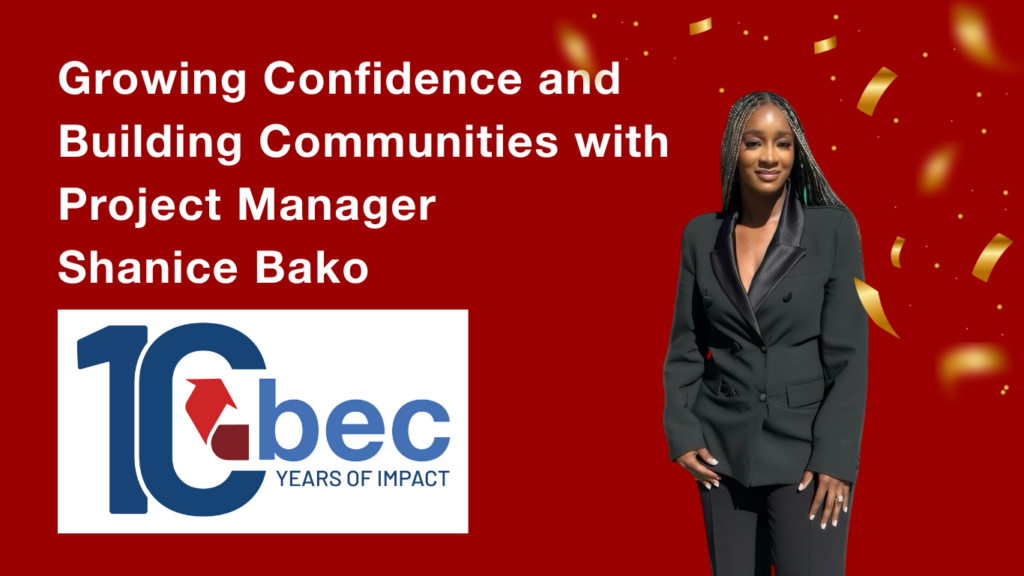
Shanice joined The BEC in January 2024. She brought with her a dynamic background of experience; spanning stakeholder engagement, data analytics, project management, and even political finance. But what drew her to The BEC was something deeper.
“I was looking for something more grassroots… something that had real community impact and focused on entrepreneurship,” she explains.
Working with CEO Karen West-Whylie, Shanice describes the environment at the BEC as both empowering and refreshingly trusting. There’s no micromanagement; just space to think, test, learn, and grow.
“It’s very much: you have the skills, you have the knowledge… just go for it. And if something goes wrong, we’ll figure it out, adapt and course correct.”
For Shanice, this kind of trust hasn’t just helped her grow as an employee, it has boosted her confidence and leadership skills.
Programmes designed to meet people’s needs
At the heart of Shanice’s work as BEC Project Manager, is programme delivery. This entails designing and implementing initiatives that support local entrepreneurs and communities. And it’s not just once-off workshops, but rather sustainable programmes that work closely with and give entrepreneurs the tools to eventually thrive independently.
One of the standout programmes she worked on is Amplify, curated to help small businesses strengthen their foundations and become market-ready.
“A lot of businesses have great ideas, but they’re missing the fundamentals; understanding their audience, being investment-ready, or even meeting basic compliance requirements,” she explains.
Amplify didn’t just teach theory, the premise of the programme was to meet businesses where they are at, and help them build practical, scalable systems.
Shanice shares the story of Vivian, founder of Nomi’s Kitchen; a food business that started from a flat, juggling online orders while working full-time.
Through the programme, mentorship, and access to funding, Vivian transitioned into a full-time entrepreneur, moved into a professional kitchen space, expanded her client base, and even hired an apprentice.
“It’s amazing to see someone go from ‘I hope this works’ to building something sustainable and thriving,” Shanice says.
Tackling the real issues, together
Beyond business development, The BEC is deeply embedded in addressing community challenges.
The Kitchen Catalyst Programme is one such initiative; created to tackle food poverty, improve access to nutritious meals, and build a more inclusive local food system.
Through live cooking demonstrations, facilitator training, and community-led sessions, the programme empowered residents with practical skills; from budgeting and nutrition to reducing food waste. The impact was both tangible and immediate.
The team was tasked with training eight facilitators and over-delivered by training 20.
Some participants went on to launch their own cooking clubs. Others secured paid opportunities delivering workshops in schools, youth centres, and community spaces.
One participant, initially unsure of her abilities, gained the confidence to start her own cooking initiative.
“That’s what stands out the most,” Shanice reflects. “Not just being a part of business growth, but witnessing personal growth. Seeing someone realise, ‘I can actually do this.’”
The reality behind the impact
While the outcomes are inspiring, Shanice is honest about the challenges behind the scenes.
“Stakeholder management is probably the hardest part,” she admits. Balancing the expectations of funders with the real, on-the-ground needs of participants requires constant navigation.
There’s also a broader misconception she wishes more people understood: these programmes aren’t “free” to run, most may be free to participate, but there is funding that goes into making them successful.
“There’s so much planning, coordination, and expertise involved. Mentors are paid, resources are developed, it’s a whole ecosystem behind the scenes.”
And perhaps most importantly, there are time constraints. Funding cycles mean opportunities don’t stay open forever, this is something that can be frustrating when businesses realise the value of a complete programme when it is too late.
A culture that makes it all possible
What makes The BEC different? According to Shanice, it comes down to culture.
The organisation’s flat structure allows for quick decision-making, minimal red tape, and genuine collaboration. It’s a space where ideas can move from concept to execution quickly—and where people feel supported, not restricted.
“It’s warm, it’s approachable… and you’re trusted to do your job.”
That trust has been transformative for Shanice herself.
“I’ve grown so much. Not just in my technical skills, but in my confidence and how I approach challenges.”
Looking ahead: more impact, more reach
As The BEC celebrates a decade of impact, Shanice is most excited about what comes next.
Her main focus is to continue expanding reach.
“I want more people to know about The BEC and experience what’s available to them.”
From strengthening social value in local business to building deeper connections between the private and community sectors, the future is full of opportunity.
And if the past ten years are anything to go by, the impact will only continue to grow.
If there’s one thread that runs through Shanice’s story, it’s this: impact isn’t just about programmes, it’s always about people. It’s about confidence built, risks taken, and lives changed. And sometimes, all it takes is the right support system to turn “I’m not sure I can” into “I did.”
#TenYearsOfImpact #EmpoweringCommunities #WomenInBusiness #ImpactInAction #BECImpact